How structured discovery across two news brands lifted weekly puzzle engagement by 129% and 122%.
COMPANY
DC Thomson
London, UK
my role
Product Designer
Team
Product Manager, Engineers, QA, Puzzler, Product Designer
SCOPE
discovery, problem definition, UI refresh, testing, launch
Weekly puzzle users on The Courier
466 → 1,069 weekly users · Dec 2024 to Jan 2025
Weekly puzzle users on The P and J
345 → 769 weekly users · Dec 2024 to Jan 2025
Beyond the brief
DC Thomson Media publishes two of Scotland's most established regional news brands: The Courier and The Press and Journal. Both had puzzles available on their websites and apps, but the feature was quietly underperforming. Readers weren't finding them, and those who did were running into friction before they could experience any value.
The brief was intentionally open: make puzzles more engaging, build a habit.
The team had already tried promoting puzzles through email, newsletters, and social. None of it moved the numbers. That told us the problem wasn't awareness alone.
Why it mattered to the business…
Readers who engaged with puzzles tended to return more often and spend more time on site. But the business goal wasn't just engagement, it was repeat visits and habit. The question wasn't only "how do we get readers to play a puzzle?" but "how do we give them enough reasons to come back tomorrow, and the day after?"
We ran five research streams to understand the problem
"I had no idea puzzles were even part of the site. I've been reading the paper online for years."
Reader, The Press and Journal
"I clicked on the crossword and it immediately asked me to subscribe. I hadn't even seen what it looked like."
Reader, The The Courier
"I can't play the puzzle that I wanted to play, the puzzle that's free isn't the one I want to play."
Reader, The Courier
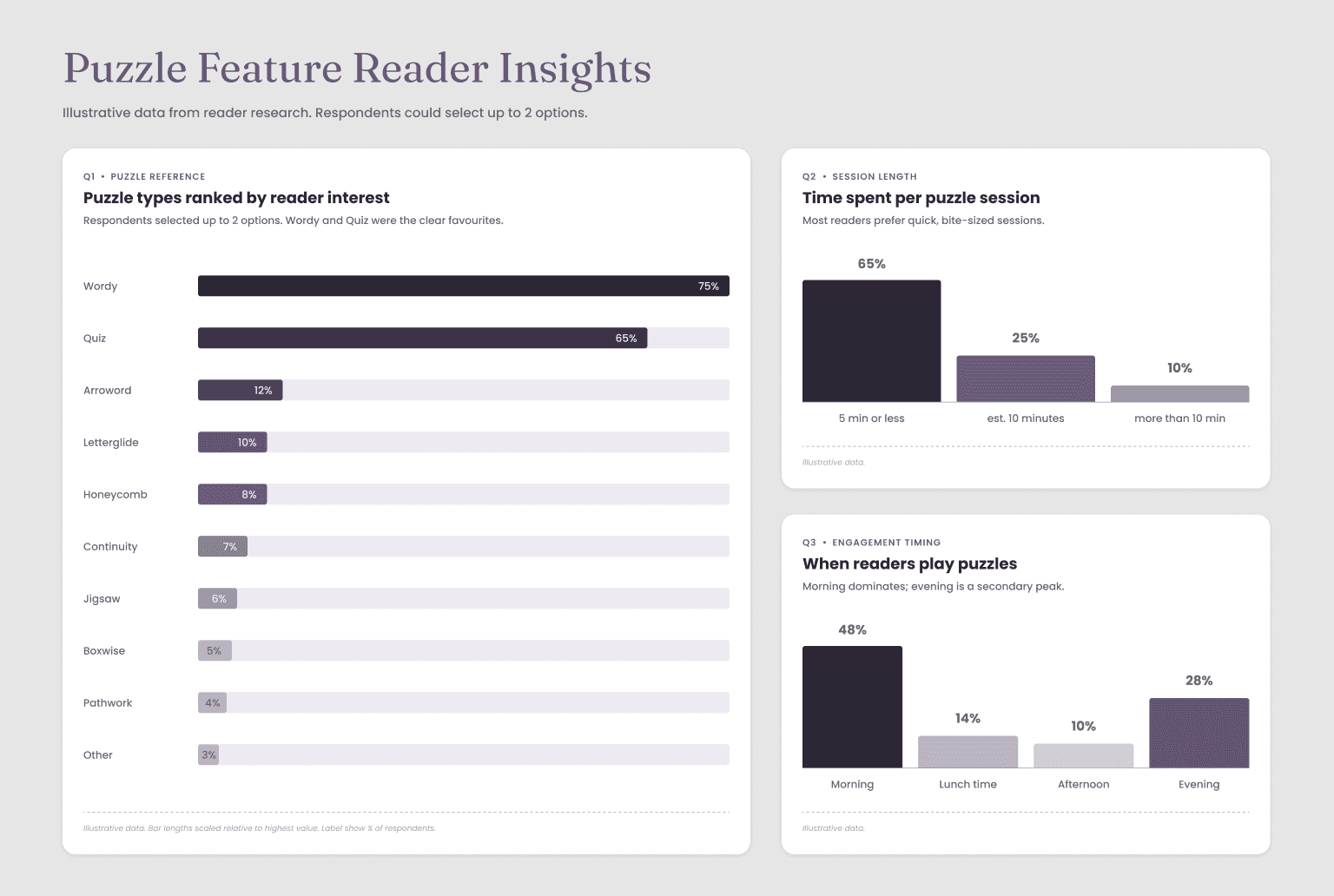
Survey results visualisation
Four distinct problems
The findings pointed in four directions. Each needed a different solution, and rushing to any of them without understanding the others would have meant solving the wrong thing.
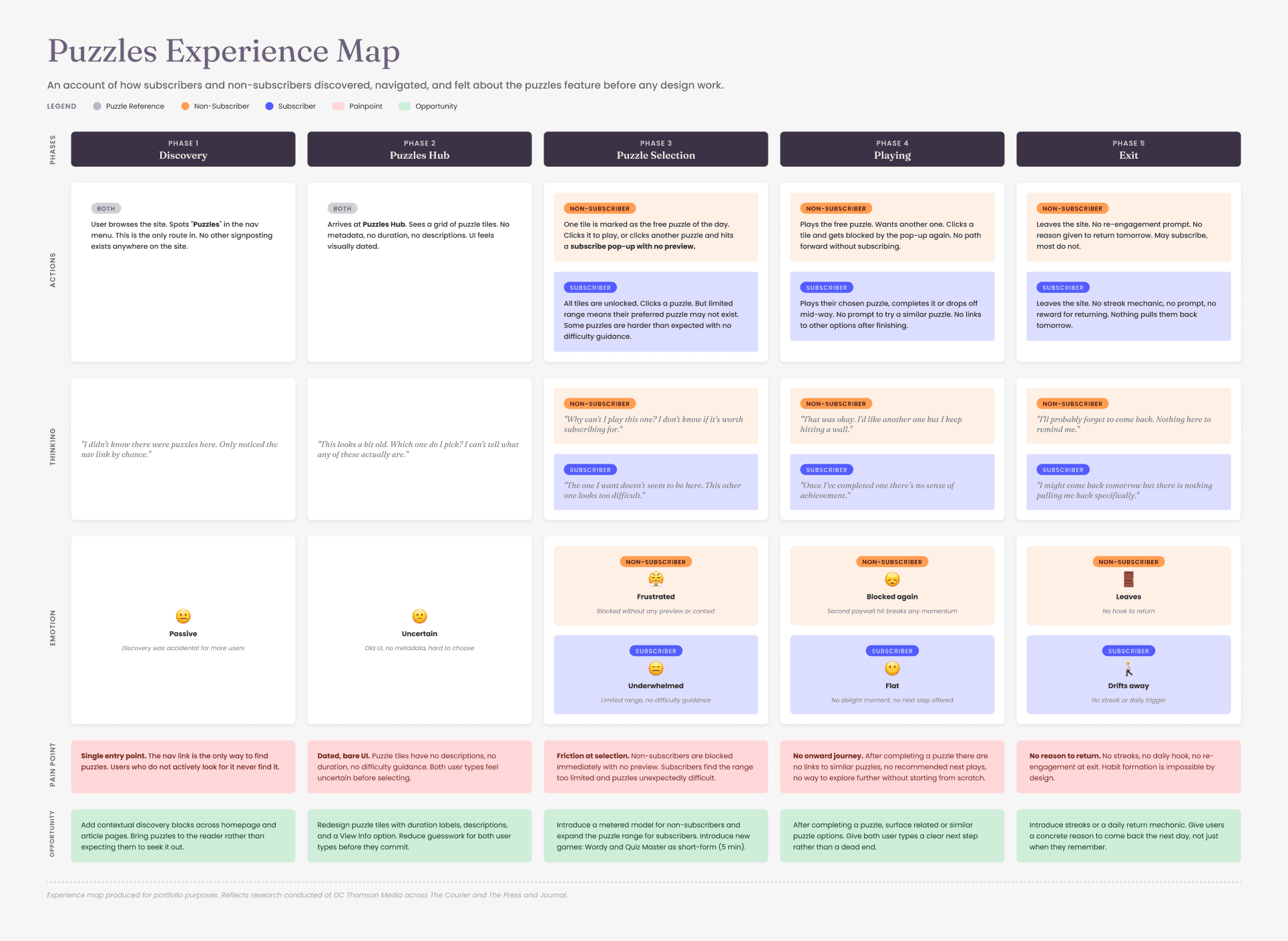
READER EXPERIENCE MAP
Discoverability Recirculation blocks
Previously, puzzles only appeared in the site navigation. The hypothesis was simple: meet readers where they already are.
There was an idea on the table to embed playable puzzles directly inside articles. I pushed back. Articles exist to support reading. Turning them into game launchers would undermine the primary user goal. Instead I designed recirculation blocks placed contextually on article pages, the homepage, and category pages. Visible enough to drive click-through, contained enough not to derail reading.
Today's Puzzles listing
A small block featuring three puzzles with icons giving readers a preview of the formats on offer. Each puzzle linked directly. A "Find out more" link took readers to the full Puzzles Hub where they could see the complete range available.
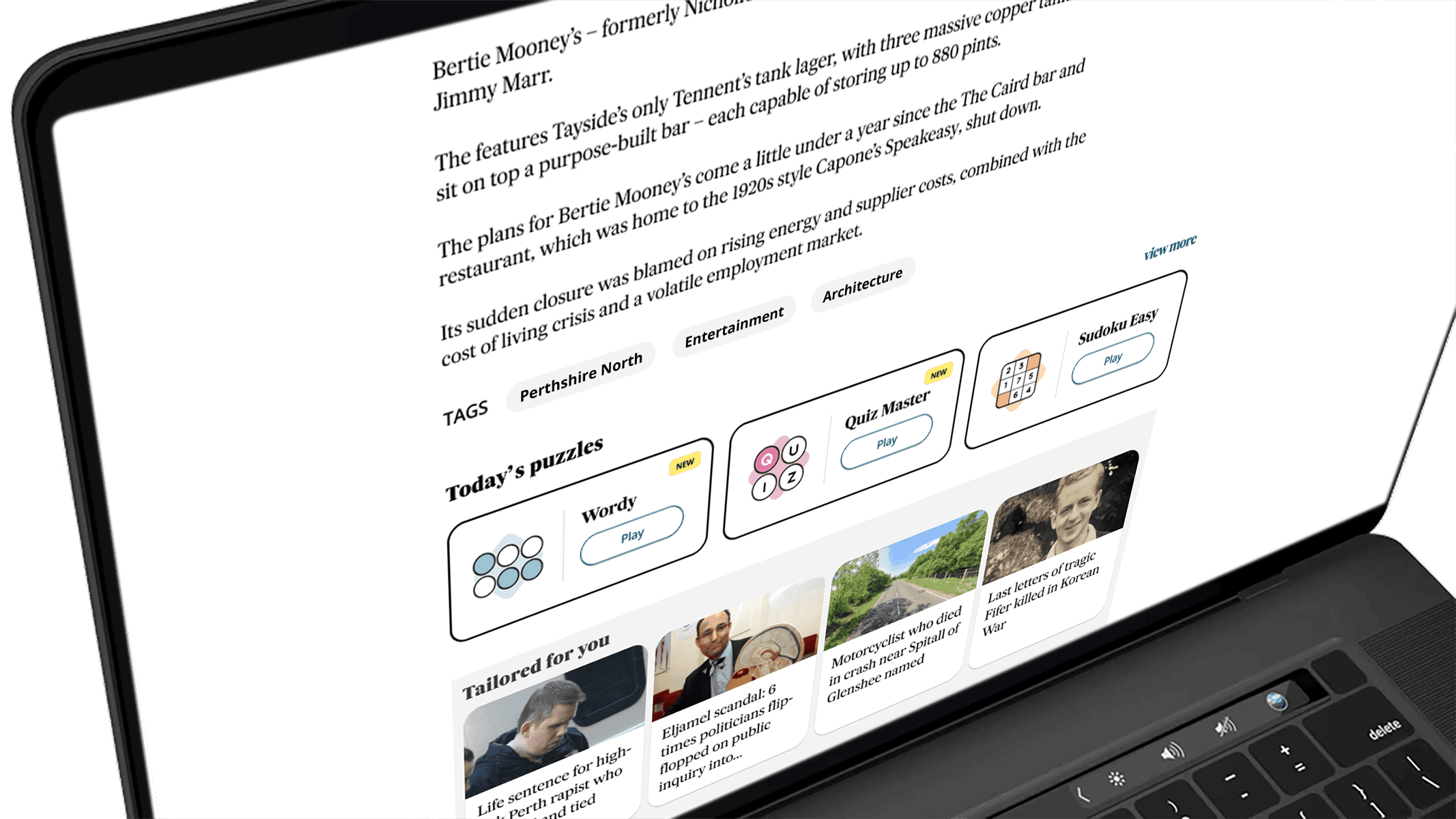
"TOday's Puzzles" Embedded on homepage, category and article pages
Single-puzzle promo
a graphic block promoting one specific puzzle. Clicking it launched that puzzle directly. Lower friction for readers who just wanted to play something immediately.
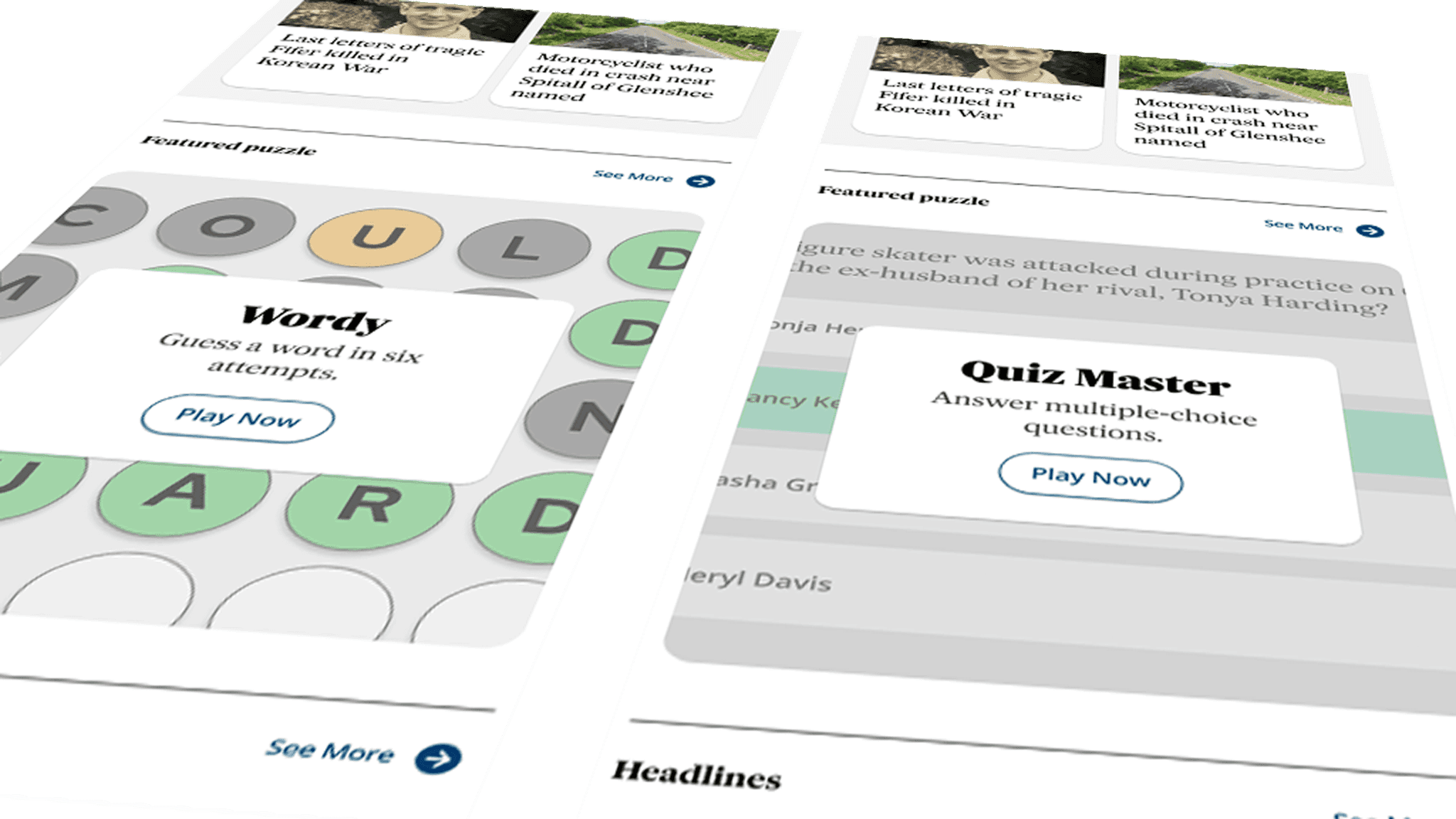
single promo puzzles embedded on article pages
We did briefly test newsletters and social media as additional channels. Neither moved the needle, so we pulled focus back to on-site placement where the intent was already there.
OPTIONS CONSIDERED
Embedded puzzle inside article · Pop-up modal on scroll · Contextual recirculation blocks
WHAT WE CHOSE
Two recirculation block formats across articles, homepage, and category pages.
WHAT WE TRADED
Broader channel reach, in favour of targeting readers already in an active reading session.
Paywall Friction
We designed a metered system. Rather than assigning a random free puzzle, free users could choose one puzzle of their preference. Agency first, subscription ask second.
Research told us puzzles alone wouldn't drive new subscriptions, but knowing they were included gave existing subscribers more reason to stay. That distinction shaped how we framed the metering: less acquisition tool, more retention signal.
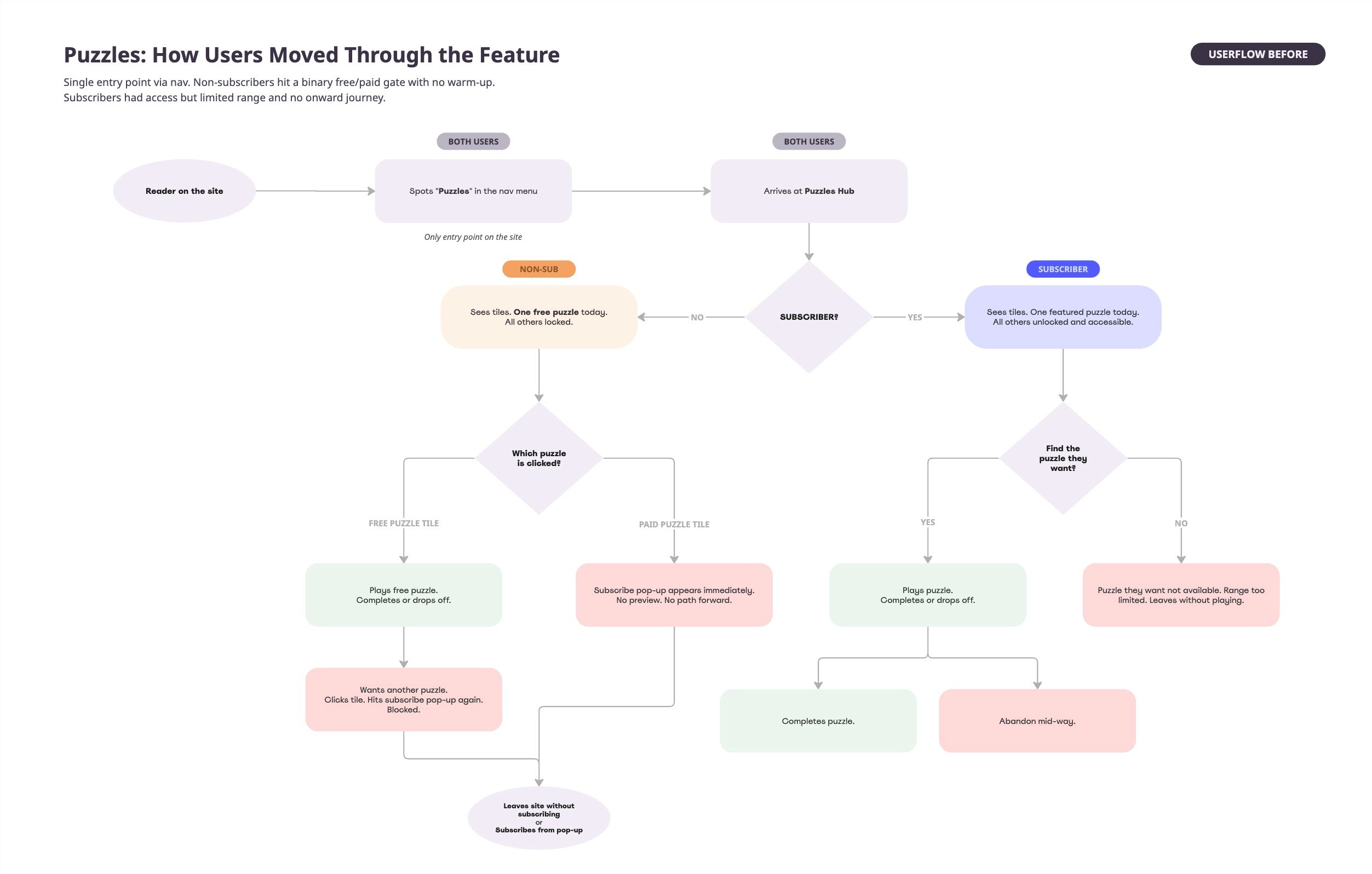
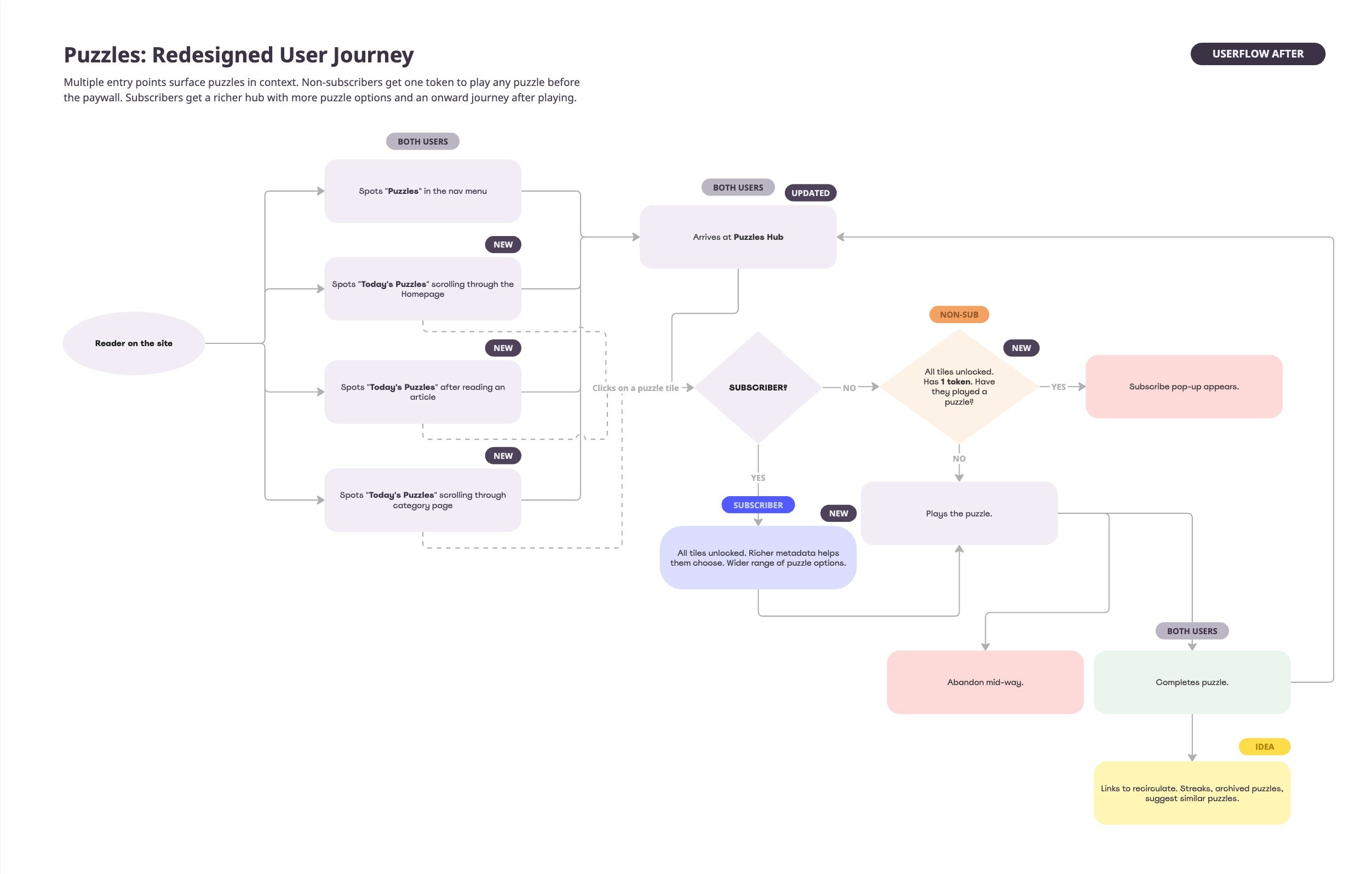
Userflows before and after changes
OPTIONS CONSIDERED
Random free daily puzzle (existing) · Hard paywall with promo trial · User-chosen single free puzzle.
WHAT WE CHOSE
User-chosen single free puzzle (metered).
WHAT WE TRADED
Simpler implementation, in favour of giving readers meaningful sampling.
Status: Tested with stakeholders, scoped with engineers, handover documentation complete. Did not ship before business priorities shifted.
Modern UI, shorter formats, less guesswork
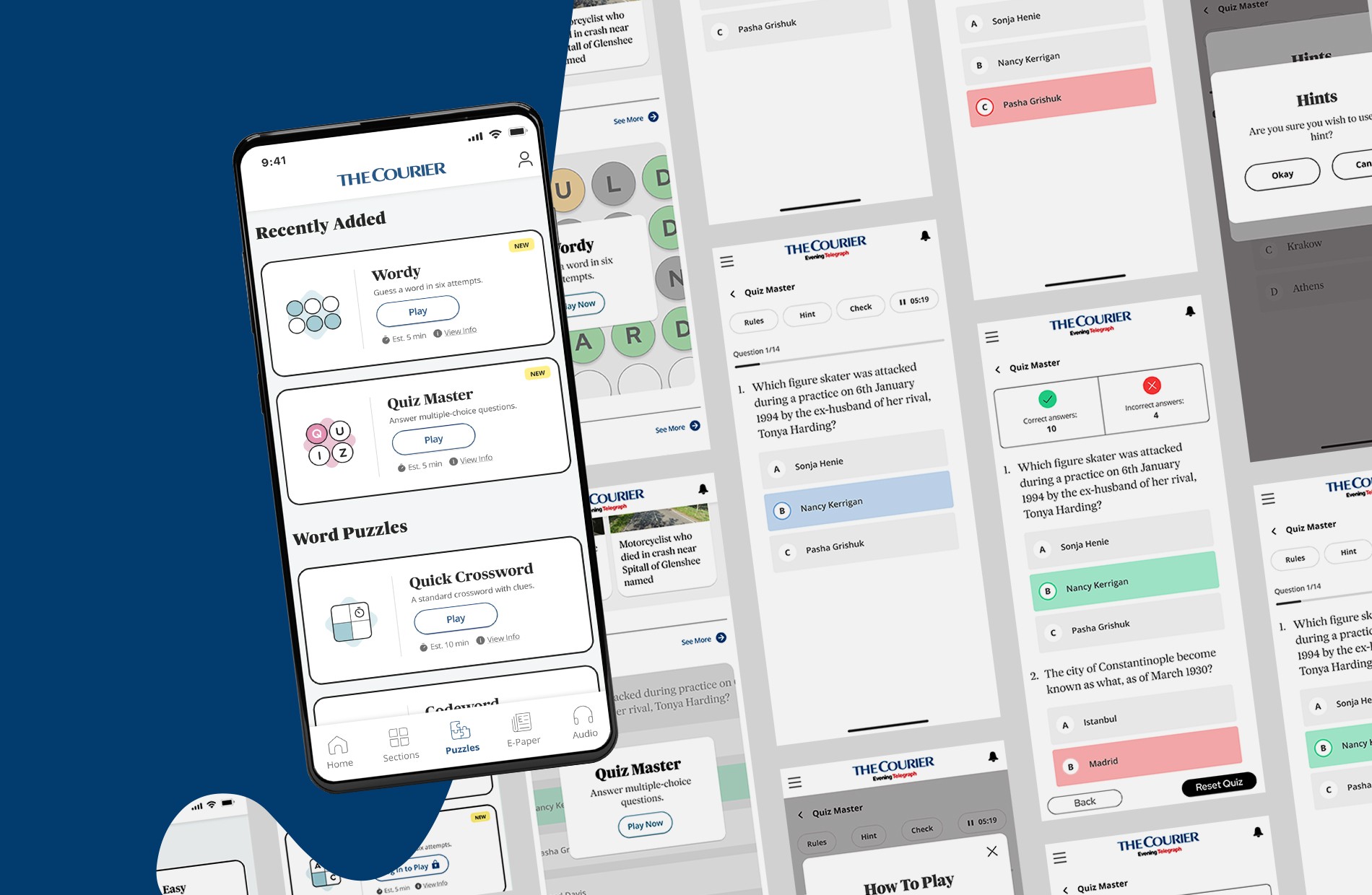
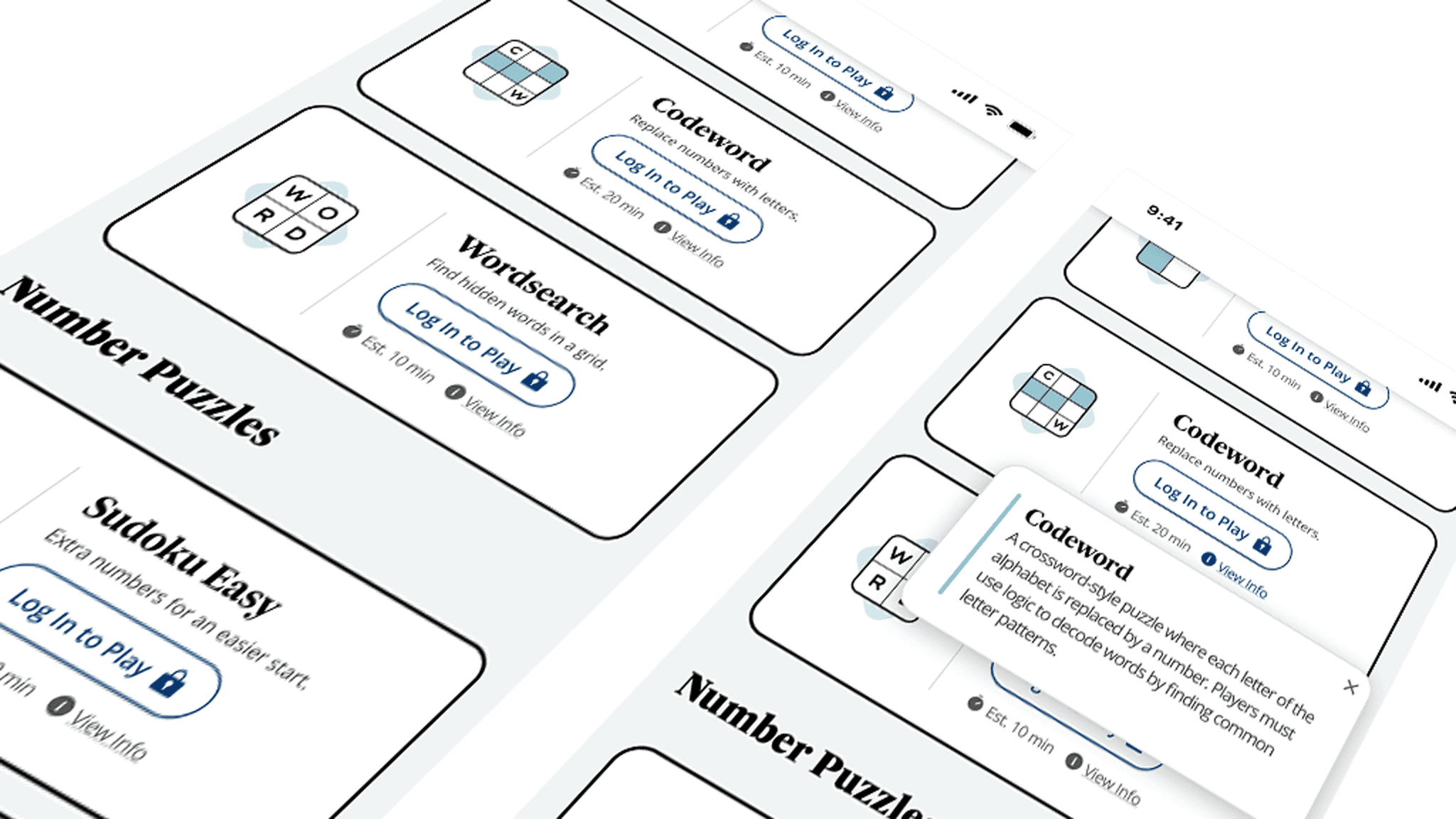
The dashboard and puzzle tiles got a full visual refresh, modernised and aligned to brand guidelines for both The Courier and The Press and Journal. Both brands share the same puzzle UI components with slight visual differences between them, a constraint driven by Puzzler's platform rather than a design choice.
Puzzle tiles were updated to show estimated completion time and a View Info link with a short description of each puzzle. Readers could see what they were committing to before clicking play. Less guesswork, less abandonment.
The refresh was staged deliberately.
Puzzles Hub Mobile View
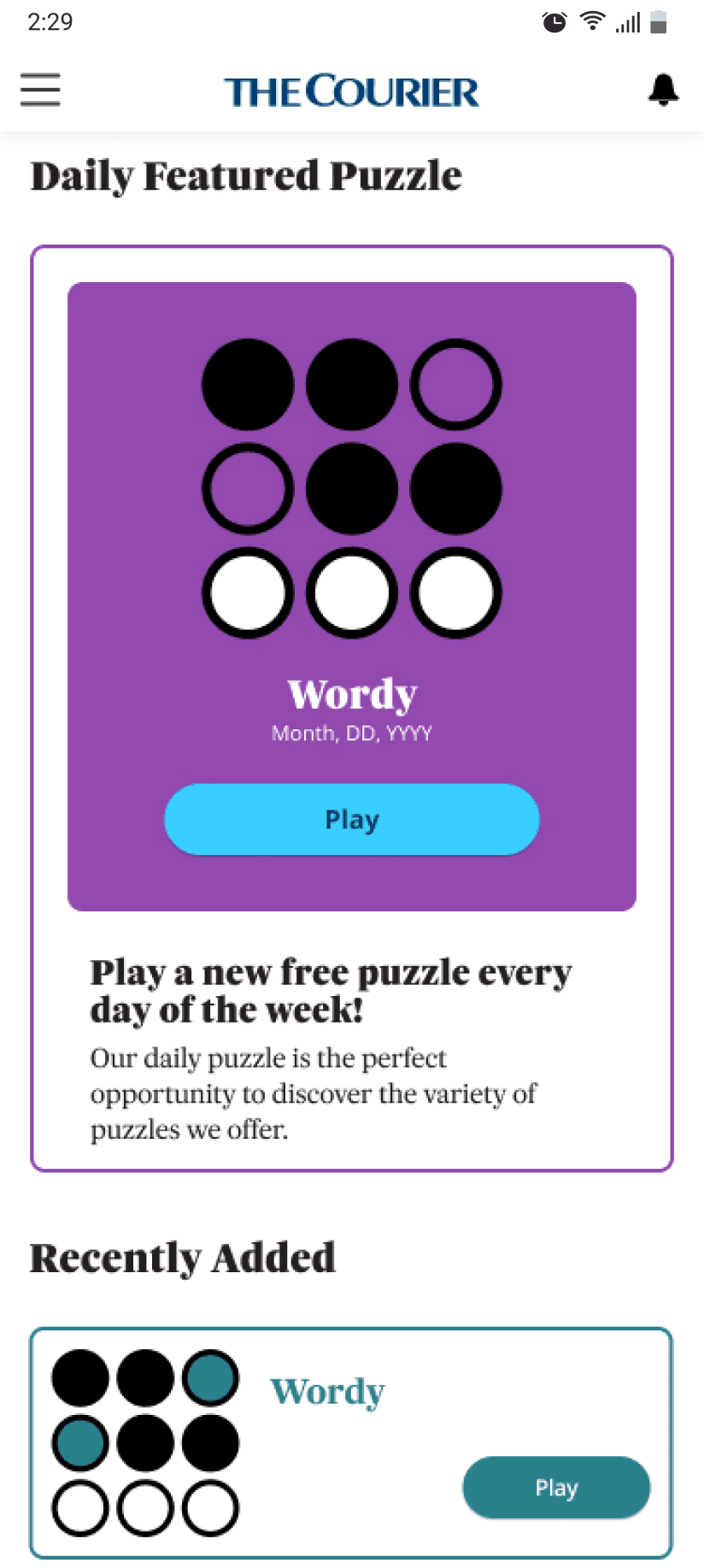
Old Hub
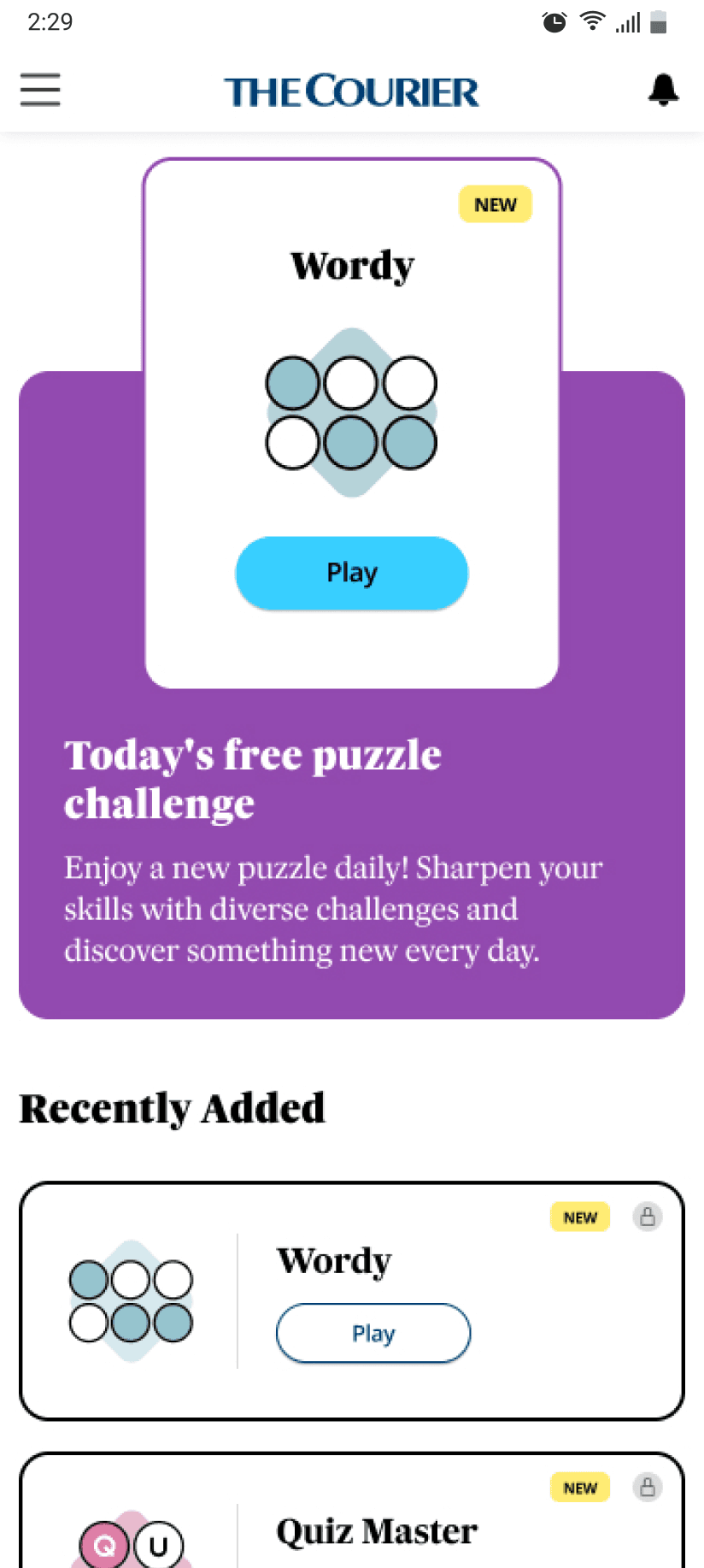
New hub stage 1
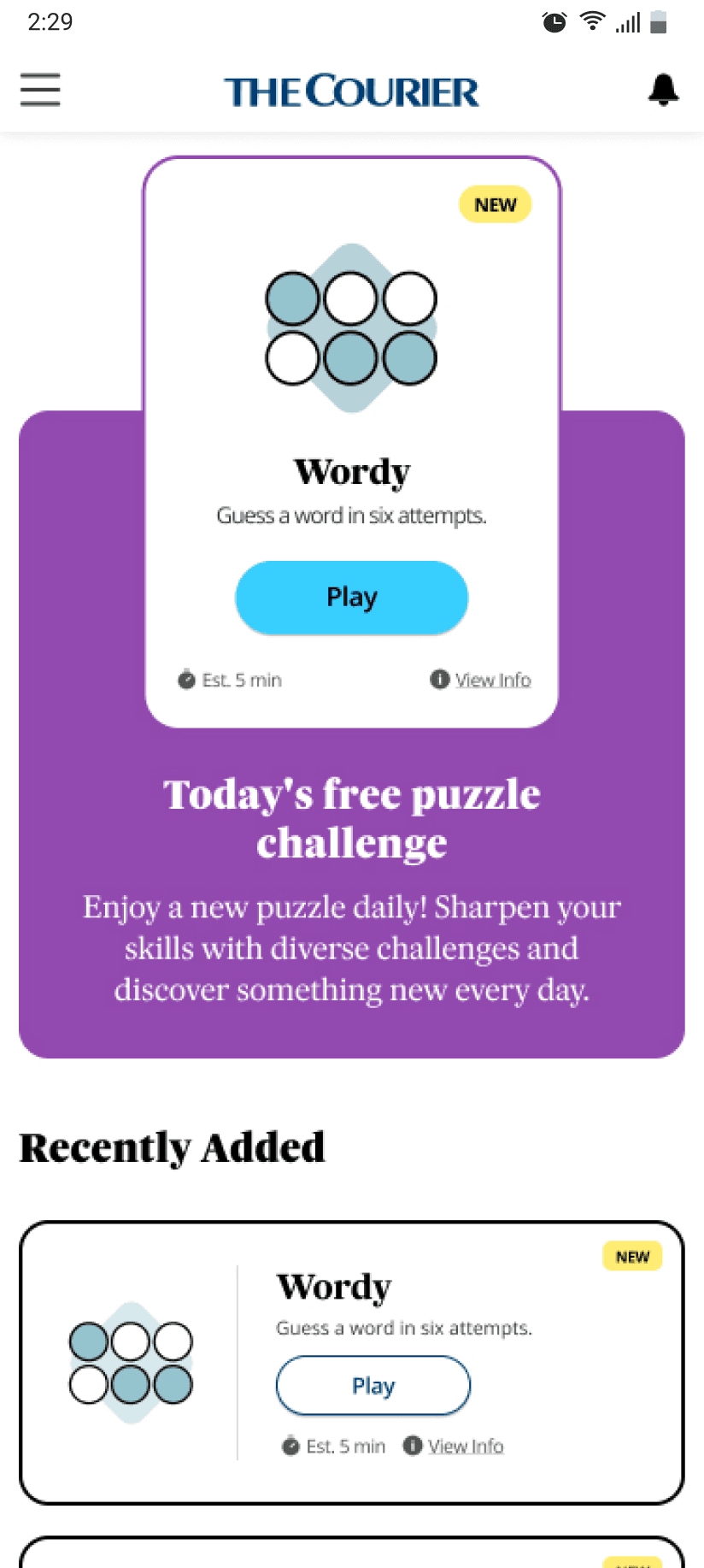
New hub (stage 2)
On The Courier app - new puzzles hub (stage 2)
Estimated completion time, View Info descriptions, and improved puzzle tile hierarchy. Designed and approved, handed over to engineering.
Game-level updates
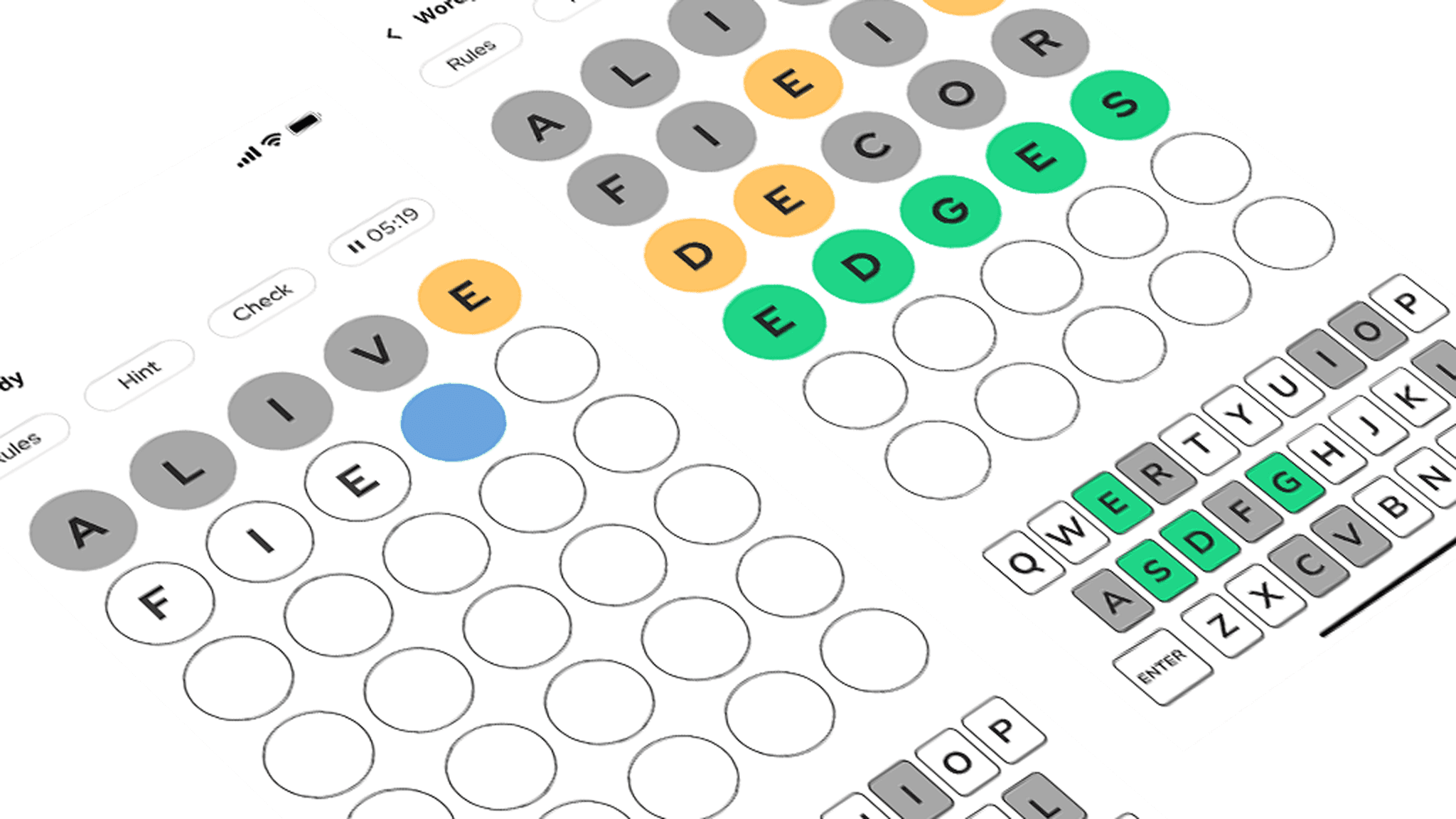
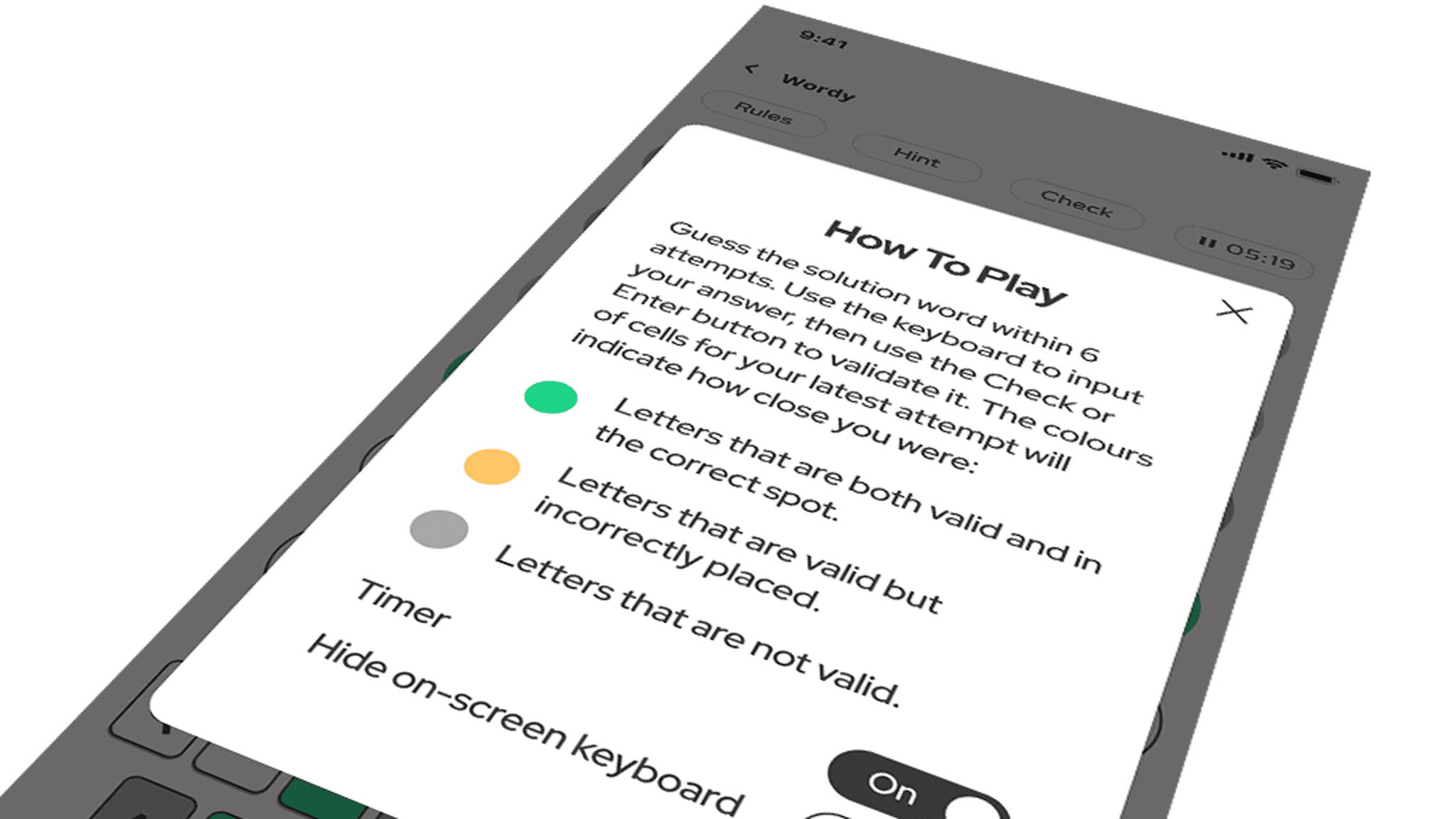
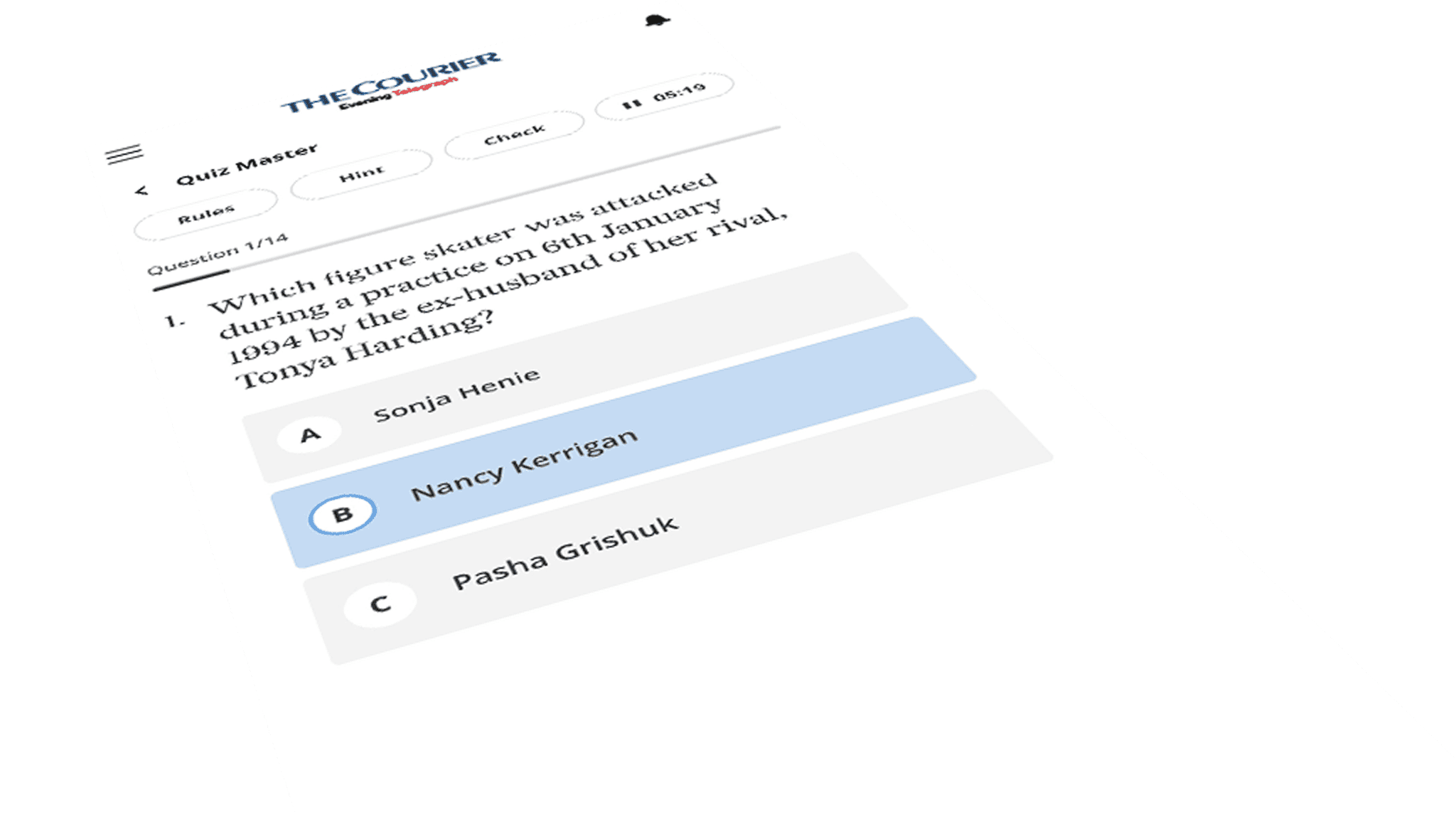
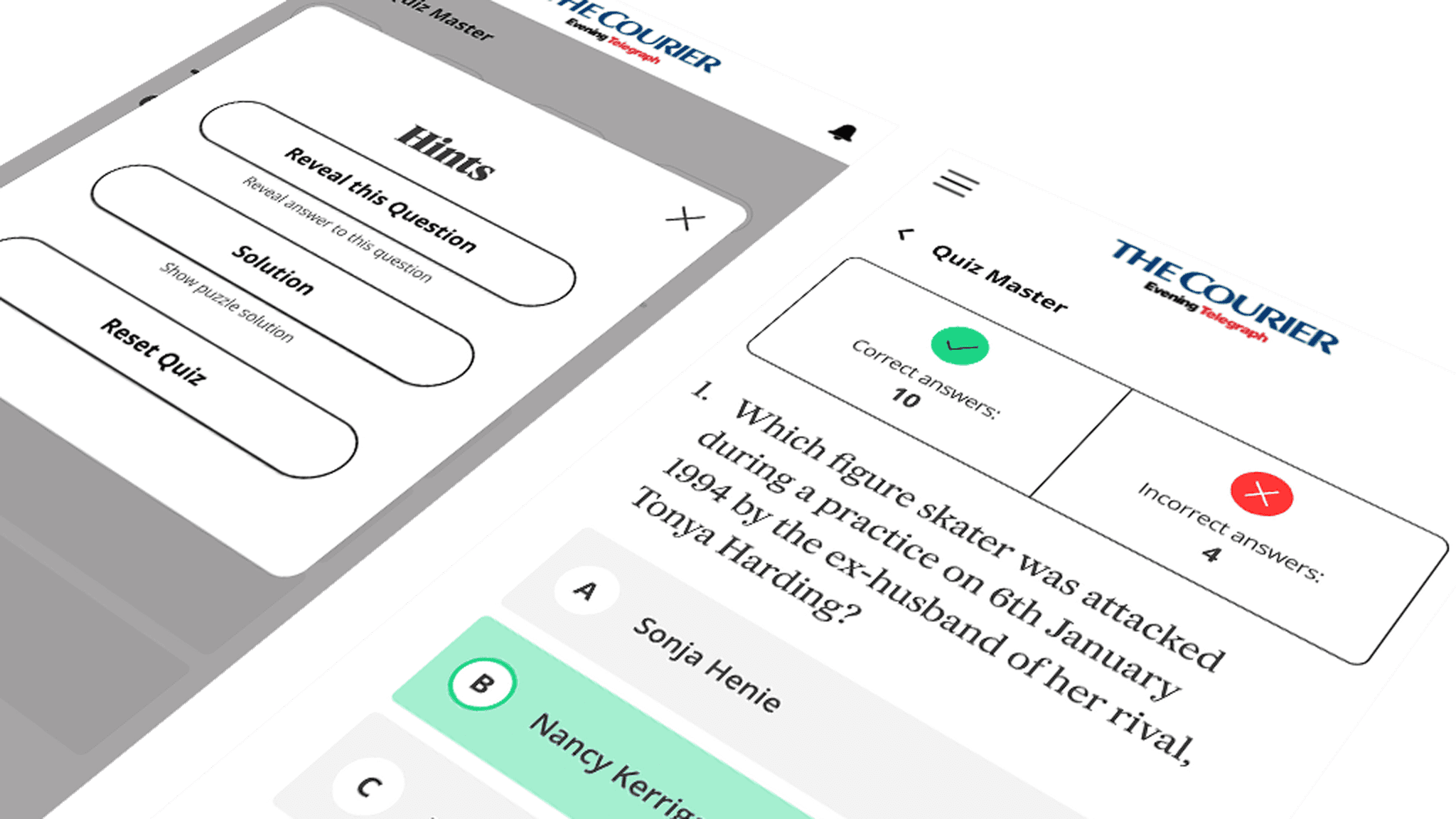
Alongside the dashboard, the in-game UI for both Wordy and Quiz Master needed an update. The existing screens felt cramped and out of step with the new look.
Wordy
Quiz Master
OPTIONS CONSIDERED
Single-stage UI and features launch · Defer UI until features ready · Stage the rollout.
WHAT WE CHOSE
Stage the rollout: visual first, features second. Short-form formats added in parallel.
WHAT WE TRADED
A single tidy launch, in favour of shipping momentum and getting earlier feedback.
Validating before we built
What readers told us
"I found the puzzles quite easily this time. Before I wouldn't have known where to look."
Reader, The Courier
Discoverability landed clearly. Readers who had previously struggled to find puzzles noticed the recirculation blocks without prompting and understood what they were for.
"It's useful knowing how long it'll take. I can decide if I have time for it before I start."
Reader, The Press and Journal
The estimated completion time on puzzle tiles reduced hesitation. Readers felt more in control of their choice before committing to play.
"I like being able to choose the puzzle I actually want to try rather than being given one."
Reader, The Press and Journal
The metered system resonated. Giving readers agency over which puzzle they sampled made the free experience feel considered rather than arbitrary.
What changed, in numbers and in culture
What drove the lift: the recirculation blocks plus the Stage 1 UI refresh, both shipped to production. The metered paywall and Stage 2 features were not yet live, so the engagement gain came from discoverability and modernisation alone.
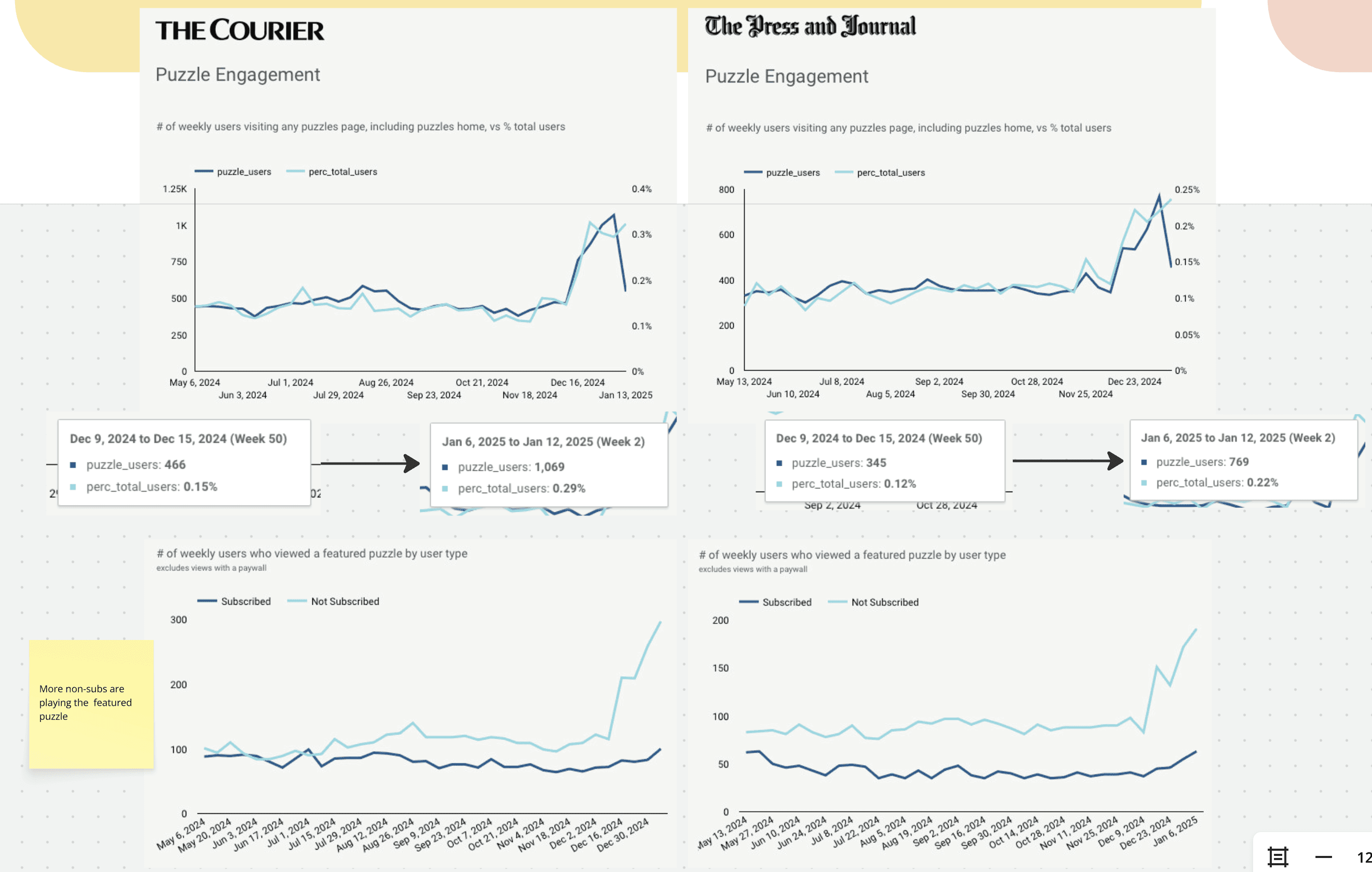
engagement charts using tableau
Being honest about scope
Two pieces didn't make it before priorities shifted
The metered paywall. Designed, tested with stakeholders, scoped with engineers, handover documentation complete. Did not ship before business priorities shifted.
Stage 2 dashboard features. Estimated completion time, View Info descriptions, and updated puzzle tile hierarchy. Designed and approved, in build when I left.
If I were continuing the work, the next bets would be streaks, archives, and a daily challenge format to deepen the habit loop the engagement data suggests is forming.
Three things I took from this project
Framing matters more than fixing. The brief said "make puzzles more engaging." Discovery told us engagement wasn't even the first problem. Discoverability and access came before experience. Getting that sequencing right shaped the whole project.
Designing for two brands at once is its own constraint. The Courier and The Press and Journal have different audiences and different brand identities. Solutions had to work for both rather than being designed for one and adapted. That kept me honest about which design choices were truly core and which were brand-specific dressing.
I'd prototype earlier next time. Ideas that didn't get greenlit could have been validated quickly with low-fidelity tests. Cheap evidence moves priorities faster than a strong argument alone. I'd also push to agree measurement frameworks with stakeholders upfront, so success isn't left open to interpretation after the fact.